Chinese


 Chinese

 Location :
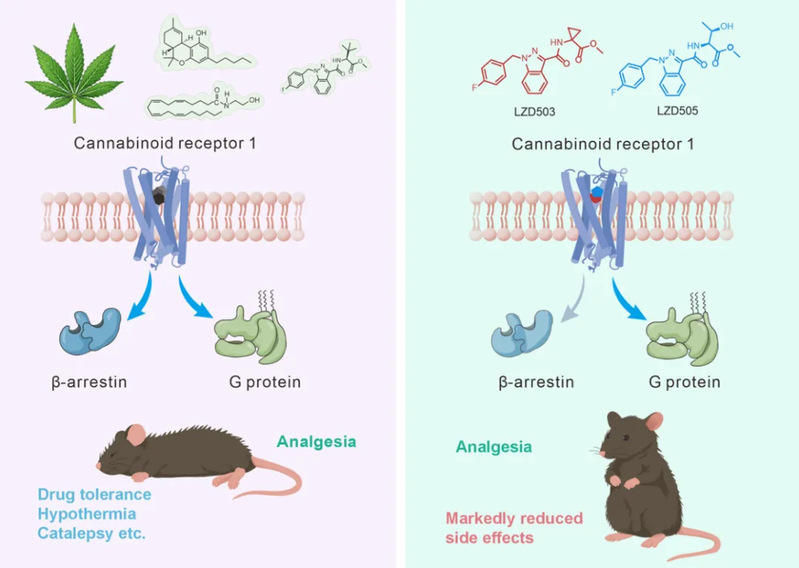
 The research team led by Professor Xiaoming Li, in collaboration with Professor Xiaowu Dong and Professor Yan Zhang, has recently published an article titled Rational Design of Gi-biased CB1 agonist with reduced side effects in Cell on April 13th, 2026. In this study, they developed Gi-biased CB1 receptor agonists that decouples therapeutic efficacy from adverse effects.
The clinical use of cannabinoids for pain and emotional disorders is limited by their side effects, including addiction, cognitive impairment and tolerance. The therapeutic effects of CB1 agonists are primarily mediated by Gi/o protein signaling, whereas the recruitment of β-arrestin1 is associated with unwanted side effects. To decouple these pathways, the authors utilized previous structural insights into the CB1–β-arrestin1 complex to identify a specific steric clash within the receptor's binding pocket, which lead to a more deeply buried configuration to accommodate β-arrestin1 coupling.
Based on this, they rationally designed compounds which favor Gi signaling. In mouse models of both chronic and acute pain, these Gi-biased agonists demonstrated potent analgesia comparable to traditional agonists but without inducing drug-seeking behavior, tolerance, or impaired motor and thermal regulation.
This structure-based approach provides a blueprint for developing next-generation GPCR therapeutics with dissociated signaling profiles, offering a promising alternative to opioid-based pain management.